


Q&A: 'Obsession' composer Rock Burwell on scoring the breakout hit
Q&A: 'Obsession' composer Rock Burwell on scoring the breakout hit

Cory Woodroof, For The WinSat, July 18, 2026 at 7:43 PM UTC
0
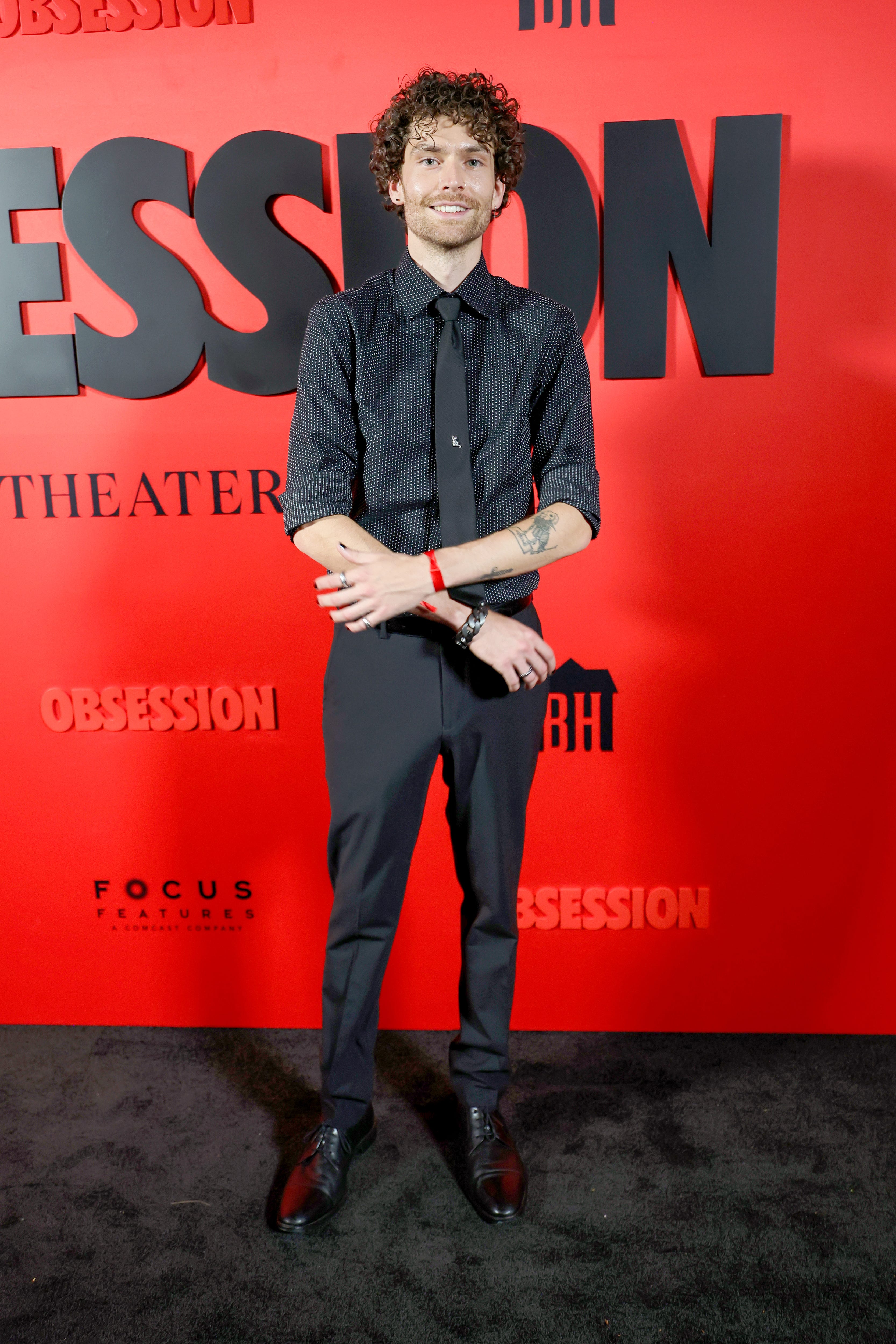
Not even a cracked One-Wish Willow could dream up such an answered wish as what Obsession has done at the multiplex this summer.
Writer-director Curry Barker's first proper theatrical film is still in the midst of one of the greatest box-office runs in a generation, grossing nearly $430 million through two months of release on a reported $750,000 budget.
The film has christened the emergence of Barker as one of the most coveted filmmakers of his generation, provided actor Inde Navarrette with the breakout performance of a lifetime that may well launch her into the Oscar race and given composer composer Rock Burwell an outstanding platform to share his synth-senational skills with the score.
Burwell's music has been featured all over TikToks this summer as the film's stronghold on the zeitgeist helped propel Obsession past its expected genre interests; the film is a genuine pillar of 2026 at the movies. The film wouldn't be as strong without Burwell's score; it's one of the best of the year, a dreamlike descent into chaos.
"It feels like the horizon has widened," Burwell said of his career explosion post-Obsession. "I'm very excited to explore more film composing and just visual media composing in general. I'd love to continue to work on really cool movies and maybe take a little exploration dive into video games or obviously TV shows, as well."
It's a fun bit of irony that folks like Burwell, Barker and Navarette are having this career moment, a real wish come true, in a film about the dangers of having your wish come true without considering the consequences. While, of course, pursuing art you love for the sake of art is a much, much, much better wish than Bear's in the movie.
"It's in the back of my head anytime I make a harmless little wish now," Burwell joked about the parallel. "I was considering like, damn, maybe I need to get a tattoo to commemorate this. I love the idea of a broken Willow tattoo, but I'm like, I need to go into that with a clear conscience. If it almost feels too symbolic in the way that this movie has taken off, [it] feels like it has transcended grounded nature, and there is some sort of mystical, spiritual element to this. So, I'm like, I need to be careful... There's nothing inherently evil about it. I think it's just, you got to be careful what you wish for and word your wish carefully."
On Burwell's desk as we chat? A fully-intact One-Wish Willow. "It will stay that way," he emphasized.
We chatted with Burwell about his big moment, what influenced his Obsession score and what he's up to next.
This interview has been condensed and edited for clarity.
If somebody had told you two months ago Obsession would have had the moment it did, what would you say?
Yeah, I'm not sure what the response would be, but it probably wouldn't be one that I would be believing. I mean, there's probably an inkling within me that knew there was something very special that could come from this movie, but not at the scale of what we're seeing. I think that's truly hard to believe, seeing these statistics and just the numbers. I've learned so much about box-office stuff, just being involved in this process. It's just such a wild experience.
What helped influence your work with this film?
Yeah, I think, honestly, developing the sonic palette first was really important. Just figuring out what types of sounds we wanted to use and the overall tone, and then, just diving into the emotional complexities and the general concept of the line we're trying to walk and where to take the score. I think so much of it was just an immersive and intuitive process that there wasn't a ton of pre-planning and a methodical approach. I think it was just having long discussions about the deeper feelings and meaning within this project and just getting in the same wavelength as all of that and really just sinking into it and just taking it from there and just figuring out what sounds, and then, just getting in and working with the content.
Advertisement
Composers like Vangelis and Trent Reznor and Atticus Ross filled my head as I was listening to the Obsession score. They're so heavy on synth, such an established style in music. How did you manage to keep synth fresh?
I don't know if I set out to necessarily do that, per se. I think maybe general techniques I use in music production, working with artists in a modern sense. There was a combination of using emulations of the old vintage gear from the '80s and early '90s, and, then, probably a lot of these types of modulation and manipulation of sound using some newer tech or just the layering... Maybe just the modern feel came from just the natural element of how old I am and the music I grew up with, and then, making current music with artists. I think maybe that just came through naturally. There wasn't necessarily a strong focus on trying to do something that felt modern. I mean, we did want it to have a sense of nostalgia, or there was a timelessness to it that wouldn't necessarily land you in any particular timeframe, like this movie could have been from the '80s, '90s, early 2000s, whatever. I think it's just the nature of my background and work that maybe it just shined through that way.
What are some of the things you grew up on? Who are some of the musicians or composers who really influenced you?
I definitely grew up on a lot more rock-forward stuff and alternative music and emo and even hardcore stuff. With the wide range, I spent a lot of time in hip-hop production. I almost exclusively did that for seven-plus years. I think just casting a wide net of stuff to consume growing up and having parents that played a lot of different stuff in the house. I think I've always been intrigued by the idea of all genres, and I haven't locked in. I've had my phases as a teenager where I'm only listening to this and that. I think for composers, I guess for specifics, I always point to Angelo Baldamenti and his work with David Lynch. As far as the feeling of the score of Obsession, I feel like, maybe subconsciously, that's what I'd liken it to the most. Yeah, I didn't grow up really pursuing this particular career, too, [that's] always in the back of my head. I'm still now taking a deeper dive into the world of film composers, and now, really starting; it hasn't been until the last few years that I've really started to take notice of score in movies and stuff. There's just a lot to soak in still.
How was your collaboration with Curry Barker? How did his work style help you craft the music for Obsession?
Yeah, he was the dream collaborator, and I feel like working with him as the first director I've worked with has spoiled me so much. He lives very close by, and we do a lot of these sessions, hands-on. Especially towards the end, he's in here right up with me and getting really animated like, 'We need to make it sound like this.' He was very encouraging. I even feel like, moments where we didn't quite hit the mark, his way of redirecting that without shooting it down, he just worked. I just felt very good working with him the whole time. I felt very encouraged and very inspired, and it just was a very ambitious process. I think his passion was really shining through and lighting me up to work on this. I don't know if it's him being a little bit younger than me and reminding me of some of the things when I was his age, that excitement, but I also think that's just who he is. It was just an awesome experience working with him.
What went into developing the various themes in the movie for Bear and Nikki?
We did set out to make themes. That was a whole idea... I think we even tried to execute a little bit more pointed than what even ended up coming out because a big direction early on with Curry was like, there's not a lot of horror movies these days [where] you're getting traditional themes for characters. That was definitely the approach there. With Bear and Nikki in particular, I think, once again, it wasn't as methodical as working maybe in a scene where it is Bear's scene and realizing as I'm scoring that moment like, 'Oh, this is Bear's theme now.' I've stumbled onto it, and then finding ways to integrate that. There's a few other moments throughout the film where you get glimpses of that same title track, but it's only a couple layers of that, or it's very subdued, but it's still in there. And same with Nikki.
Unfortunately, we couldn't really find many ways to integrate her theme to be reoccurring because the early theme that was developed was kind of the pre-wish, true version of Nikki, and that's very short-lived. I think that's where you see this kind of juxtaposition... her theme is more like the innocent sweetness that hasn't been afflicted by some sort of sinister, so to speak, thing. I guess with Bear's, too, it's like that's just also representative of his character. I don't know. It was just an interesting process. We definitely set out to make those themes, but it was kind of like, [a] 'We'll know them when we get them' type of thing, and then we'll kind of reverse-engineer it.
Is there a moment in the score you feel really sums up the entire body of work?
I think the very last "Love is in the Air," part two, I would say that was the one. It's funny because that was the demo, the idea, the cue that started this whole process. It was the first thing I made for the movie. It was me trying to flex the range of showing, "Hey, we can take something sweet and romantic and twist the knife and make it really dark, and then, bring it back." I think that one in particular shows the whole scope of what we were trying to achieve.
What was it like watching Barker and company put this project together from your vantage point, seeing those moments come alive that made you feel this film was really special?
Yeah, it was so cool. Every new little bit that Curry was bringing over on his hard drive, every next 10 or 15 minutes, it was just a new bomb-drop of just creative explosion and little Easter eggs. I was consistently just blown away by the level of execution and the fine detail and just how thorough everything about this process was, given the indie and still DIY feel that it had. I think that's what was really telling to me on how special this could be because it just seemed like we weren't given much to work with as far as budget, but it felt like it was the most passionate and just well-executed project I had ever been a part of... the attention to detail, there were no shortcuts. It was just an incredibly cool process to witness.
What do you think the film's success, particularly with young audiences, means?
I hope that it means people are being inspired to follow through and chase some ideas that maybe they thought weren't possible or were totally phasing out by the rise of things like AI or just the amount of money it takes in just the corporate machine. I really hope that it's inspiring creatives and young creatives to pursue these things, but also just going to a theater, seeing a packed theater of young people, and it being totally silent in those moments, and in no phones-in-sight type of thing. I hope there's a bit of a rise into a little bit more of the counterculture of, let's get away from these things that are robbing our attention span and mindless junk online, and put our attention into things that are forms of art that are worth paying attention to for long stretches of time. It's really cool to see how this movie's being talked about, and it seems to have really grabbed people.
I think that's maybe one of the coolest things of this whole process is just every time I go on TikTok or Instagram, it's just like I'm seeing post after post after post. A lot of them are more than just the surface-level reaction... the amount of people that I'm seeing cover "Love is in the Air" on piano, and people that I'm seeing like, 'I've never played piano before, but I wanted to play.' That's just the coolest thing. If we can be part of this movement that is, once again, inspiring young people to feel like there's something more than just short-form content, I think that's really what I hope for and hope that this is pointing towards the future of that.
What's next for you in your career as a composer?
I can totally talk about Anything but Ghosts, Curry's next film. I'm starting the scoring process of that right now. That's going to take over the next few months for me, and continuing to release my own music. This has certainly given me a platform to do that, which is really awesome. I mean, those are the big two things I'm directly looking at. I think, in a few months, I'll probably have a lot of other things to look forward to, but this has been a very transformative process, and I was locked in on this last movie before Obsession came out. I'm like, 'Let's just keep blinders on, stay focused here.' I'm really excited to work on Anything but Ghost. I do have a couple short films that are some of my friends' projects... they're just getting wrapped up now, too. So, a couple little things here and there. [I'm] very excited for the future.
'Obsession' is still playing in theaters and is now streaming on Peacock.
This article originally appeared on For The Win: Q&A: 'Obsession' composer Rock Burwell on scoring the breakout hit
Source: “AOL Entertainment”
