


New tariffs, same headaches: Trump sued by small businesses scrambling to stop his newest import taxes
New tariffs, same headaches: Trump sued by small businesses scrambling to stop his newest import taxes

Brian O’ConnellTue, July 28, 2026 at 7:00 PM UTC
0
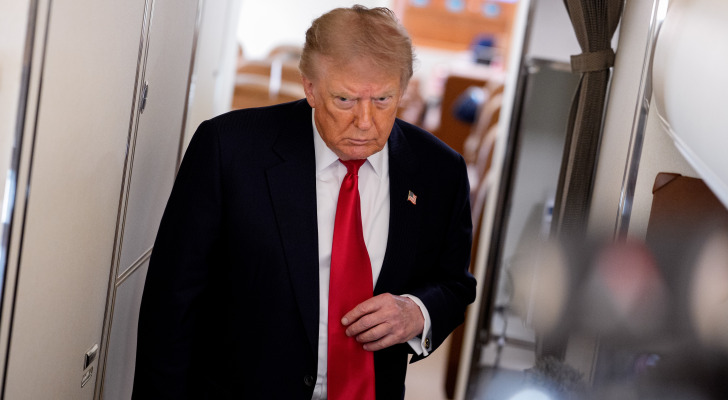
Trump tariffs are back in the headlines after a few months on the Oval Office shelf, as the White House green-lit new levies in a late July blitz. The new import tariffs land at between 10% and 12.5%, are aimed at 80 American trading partners and encompass 94% of U.S. imports.
Now, apparently, some U.S. businesses have had enough, as the New York City-based Liberty Justice Center has filed a lawsuit in the U.S. Court of International Trade against Team Trump’s replacement tariffs imposed under Section 301 of the Trade Act of 1974.
Top Picks -
Jeff Bezos backs a platform that lets anyone invest in rental homes for as little as $100 — 6 ways to build wealth like a landlord without actually being one
Dave Ramsey warns nearly 50% of Americans are making 1 big Social Security mistake — here’s what it is and 3 simple steps to fix it ASAP
The tax breaks in Trump's 'big beautiful bill' expire after 2028 — and experts say most people won't act in time. What to do before the window closes
The suit was filed on behalf of a pair of small U.S. businesses: Burlap and Barrel, a New York City-based single spices retailer, and Collective Horology, a California-based watchmaker, retailer and distributor. In it, the plaintiffs argue the federal government cannot preserve a predetermined global tariff policy just by shifting from one statute to another.
According to the lawsuit, “Section 301 permits action against particular foreign acts, policies or practices only after the U.S. Trade Representative (USTR) makes the findings Congress required and selects an action designed to eliminate the identified practice.”
Hopping from tariff to tariff under various federal laws has earned the ire of the plaintiffs and their backers.
“Forced labor is morally indefensible, but an important objective does not give the government permission to ignore the law,” said Sara Albrecht, chairman and CEO of the Liberty Justice Center in a statement. “The administration allowed one global tariff to expire and immediately replaced it with another under a different statute. Changing the statute doesn’t change the law. Every tariff authority has limits.”
Moneywise reached out to the Office of the U.S. Trade Representative for comment and hasn’t received a response yet. But the Trump administration has said it has no interest in cycling back to its “liberation day” tariff theme and that the forced labor issue is one that “President Trump has been focused on ... for many years,” a senior administration official told reporters in a July media call.
The timeline is key
Maybe the strongest evidence for the lawsuit’s “same policy, new statute” argument is via the tariff timeline.
“USTR opened 60 forced-labor investigations three weeks after losing the International Emergency Economic Powers Act (IEEPA) case, closed all 60 the same day, and landed on a near-uniform 10%/12.5% structure covering 80 countries and 99.4% of imports,” Kyle Peacock, principal at Toronto-based Peacock Tariff Consulting, told Moneywise. “The notice even says the rates were set ‘in accordance with the specific direction of the President.’ That’s real pretext material.” (The Trump administration lost via a U.S. Supreme Court ruling on February 20, 2026, essentially invalidating the White House’s IEEPA tariffs.)
The real problem is that Section 301 actually says “duties,” so the government isn’t fighting on the ground it lost on in February.
“USTR also built a record with 1,600 comments and a three-day hearing, and in HMTX the Federal Circuit upheld the China tariffs against nearly identical arguments, with cert denied in June,” Peacock noted. “The winnable claim is the missing country-by-country findings, not a flat ‘no authority’ holding.”
Other legal experts say the Section 301 litigation is not simply a replay of the IEEPA cases, as unlike IEEPA, Section 301 expressly authorizes the President to impose tariffs under specified circumstances. “The question, therefore, is not whether the President possesses tariff authority at all, but whether that authority has been exercised within the limits Congress established and the Constitution permits,” Natalie Zink, an international trade attorney at Lighthill PC and a former attorney with the U.S Department of Commerce, told Moneywise.
In contrast, the Liberty Justice Center case asks the court to determine whether the Administration has interpreted Section 301 more broadly than Congress intended.
Advertisement
“They’re arguing that the statute was never designed to support sweeping, across-the-board tariffs,” Zink noted.
The issue also raises nondelegation concerns, contending that such an expansive interpretation “would effectively grant the President nearly unlimited tariff authority, which raises constitutional concerns,” Zink added.
Read More: Millionaires under 43 hold only 25% of their wealth in stocks. Here’s where their money is actually going
Here’s how the Liberty Justice Center lawsuit may play out
For the short term, it’s business as usual for the Trump administration on tariffs. Even if the plaintiffs win, nobody should plan on quick tariff relief.
“Look at Section 122: the trade court struck it down May 7, the government appealed May 8, and the Federal Circuit stayed the ruling within days,” Peacock said. “Importers kept paying a duty a court had called unlawful.”
All parties can expect the same result here, plus a likely second trip to the Supreme Court.
“Refunds are on the table with interest, but the IEEPA refunds ran about $166 billion across 53 million entries and took roughly two months just to start moving,” Peacock noted, who says a realistic legal battle timeline is one to two years.
As for the legal precedents, it all depends on how the U.S Court rules.
“A narrow decision saying USTR didn’t do its homework is a process ruling, fixable on remand with a thicker record, and a broad one, holding Section 301 can’t be used to rewrite the tariff schedule globally, would matter,” Peacock said.
Stacked with the IEEPA and Section 122 losses, the message becomes: no single statute is a universal tariff power and you can’t just relabel a program after losing.
“Even so, presidents keep plenty of authority under Sections 232, 201 and 337,” Peacock added. “What they’d lose is speed.”
More expansively, the Liberty Center case and others like it could shape the future boundaries of presidential trade authority. That’s especially the case with a decision that narrows the Administration’s interpretation of Section 301, which wouldn’t eliminate presidential authority under the statute, yet it may clarify the trade decision-making limits Congress intended.
“That could reinforce judicial scrutiny of executive action in the trade arena, and influence how future administrations invoke statutory trade authorities,” Zink added.
What To Read Next -
Here’s the average income of Americans by age in 2026. Are you keeping up or falling behind?
Robert Kiyosaki issued grim warning for baby boomers. Many could be ‘wiped out’ and homeless ‘all over’ the country. How to protect yourself now
Are you paying too much for car insurance? Here are 3 clever ways to slash your monthly bill
Here are the 7 top habits of ‘quietly wealthy’ Americans. How many do you follow?
This article provides information only and should not be construed as advice. It is provided without warranty of any kind.
Source: “AOL Money”
